Yomari: Cultural Significance, Preparation Techniques, and Culinary Variations in Nepali Tradition
Yomari is one of Nepal’s most culturally meaningful traditional foods. The word “Yomari” is derived from the Newari language: “Yo” meaning favorite or delicacy, and “Mari” meaning bread or food. Together, the term translates roughly to “a cherished delicacy.”
The dumpling is made primarily from rice flour dough, filled with sweet fillings such as chaku (molasses), sesame seeds, or khuwa (condensed milk), and then steamed. Its distinctive fish-shaped or fig-like form symbolizes abundance and fertility.
Within Nepali society, yomari is more than a dessert—it represents agricultural gratitude, ritual offering, and communal celebration, particularly among the Newar people.
Historical and Cultural Significance
Yomari is closely connected with the Yomari Punhi festival, celebrated on the full moon day of the Nepali month Mangsir (November–December).
Agricultural Roots
The festival marks the end of the rice harvest season. Traditionally, farmers prepared yomari as a gesture of gratitude to the gods for a successful harvest.
Yomari is also offered to Annapurna, the Hindu goddess of food and nourishment.
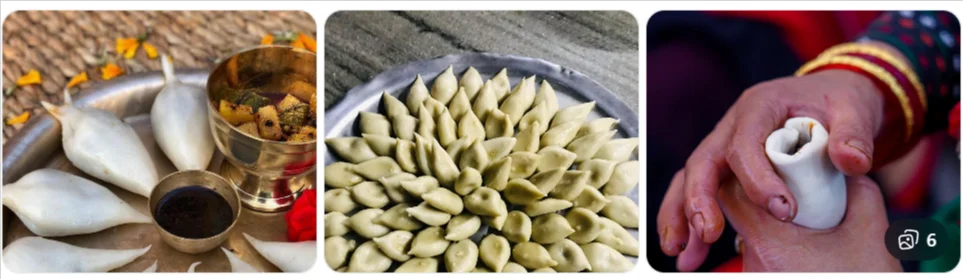
Yomari Punhi Festival
During Yomari Punhi:
Families gather to prepare yomari together.
The dumplings are offered in religious rituals.
Children often go door-to-door singing traditional songs requesting yomari.
In Newari households, the festival reinforces family unity, community bonding, and culinary heritage.
Communities and Tribes Associated with Yomari
Yomari is most strongly associated with the Newar community, the indigenous inhabitants of the Kathmandu Valley.
Regions where yomari is traditionally popular
Kathmandu
Bhaktapur
Lalitpur (Patan)
Tribes and ethnic groups that commonly prepare yomari
Newar
Increasingly adopted by other Nepali communities across Nepal
Nepali diaspora communities around the world
In recent decades, yomari has become a national delicacy, celebrated beyond the Newar community.
Types of Yomari
Although the basic structure remains the same, several variations of yomari exist depending on the filling.
1. Chaku Yomari
The most traditional type.
Filling includes:
Molasses (chaku)
Sesame seeds
Coconut
Ghee
This filling creates a rich caramel-like sweetness.
2. Khuwa Yomari
A creamy version.
Filling includes:
Condensed milk (khuwa)
Sugar
Nuts
Popular in modern households.
3. Chocolate Yomari
A contemporary variation found in urban Nepal.
Filling includes:
Chocolate syrup
Cocoa mixture
Often served in restaurants.
4. Savory Yomari
A rare variation.
Fillings may include:
Spiced lentils
Vegetables
Meat
This version resembles dumplings more than dessert.
Ingredients for Traditional Yomari
Dough
2 cups rice flour
Warm water
Pinch of salt
Traditional Filling (Chaku Mixture)
Molasses (chaku)
Sesame seeds
Grated coconut
Cardamom powder
Ghee
Step-by-Step Recipe for Yomari
Step 1: Prepare the Rice Dough
Boil water and slowly mix it with rice flour while stirring continuously.
Knead until a smooth dough forms.
Step 2: Prepare the Filling
Heat molasses until it softens.
Add:
Sesame seeds
Coconut
Cardamom powder
Mix thoroughly.
Step 3: Shape the Yomari
Take a small ball of dough and shape it into a cone or fish-like structure.
Create a hollow cavity.
Add the filling inside.
Seal the top carefully.
Step 4: Steam the Yomari
Place the dumplings in a steamer.
Steam for 10–15 minutes until the outer dough becomes translucent.
Symbolism of Yomari Shape
The distinctive shape of yomari carries symbolic meaning.
Scholars suggest that its elongated form represents fertility, abundance, and prosperity. The sealed dumpling enclosing sweetness symbolizes the hope for a prosperous and fulfilling future.
Nutritional Aspects
Yomari contains several nutritious ingredients.
Rice Flour
Gluten-free carbohydrate source
Easily digestible
Sesame Seeds
Rich in calcium
High in antioxidants
Molasses (Chaku)
Natural iron source
Provides energy
Because it is steamed rather than fried, yomari is considered relatively healthy compared to many desserts.
Yomari in Modern Nepali Society
Although traditionally limited to the Newar community, yomari has gained wider popularity.
Today it can be found in:
Nepali restaurants
Cultural festivals
Community gatherings
Nepali diaspora celebrations
Restaurants have also experimented with fusion variations, including chocolate, cheese, and fruit fillings.
Global Presence Among Nepali Diaspora
Nepali communities abroad celebrate Yomari Punhi in countries such as:
United States
United Kingdom
Australia
Japan
Middle Eastern countries
These celebrations help preserve Newari culinary traditions across generations.
Conclusion
Yomari stands as one of Nepal’s most culturally meaningful culinary traditions. Rooted in agricultural rituals and Newari heritage, the dish symbolizes gratitude, prosperity, and communal harmony. Its preparation during Yomari Punhi highlights the importance of food as a cultural artifact that connects people to their land, traditions, and identity.
From traditional molasses-filled dumplings to modern chocolate variations, yomari continues to evolve while maintaining its deep cultural roots in Nepali society.
